Global Flavors at Home — A Beginner's COOKING Guide

You don't need culinary school to cook food that tastes like it came from somewhere.
You need the right spices — and the confidence to use them.
Global cooking sounds complicated. Multiple ingredients, unfamiliar techniques, recipes that assume you already know things.
But here's the truth: most world cuisines are built on 5–7 core spices. And when those spices are already blended and balanced for you, the whole thing gets very simple.
This guide breaks down six global flavor profiles including:
• what they taste like
• what you cook them on
• how to get there tonight without a shopping list
Why Global Cooking Feels Hard (And Why It Isn't)
Most people avoid international recipes for three reasons:
Too many unfamiliar ingredients. What is fenugreek? Where do I find marjoram? What does rubbed sage even mean?
No baseline for how it should taste. If you've never had a real Greek dish, how do you know if yours tastes right?
Fear of wasting money on spices you'll use once. A jar of allspice for one recipe — then it sits for two years.
Single-serve spice blends solve all three.
Pre-measured, pre-balanced, opened right when you need them. You don't need to build a spice library.
You just need one packet per meal.
6 Global Flavor Profiles — and How to Use Them
1. Italian
What it tastes like
Herby, aromatic, warm. Rosemary, basil, oregano, garlic.
Where it shows up
Pasta, roasted vegetables, chicken, fish. (Fully vegan on vegetables — no swaps needed.)
Beginner move
Season your pasta water before the pasta goes in. Every strand absorbs the flavor from the inside out. Most people season the sauce — this is why restaurant pasta tastes different.
What to cook first
Roasted broccoli at 425F with olive oil and Italian seasoning. Twenty minutes. Crispy edges. Better than you expect.
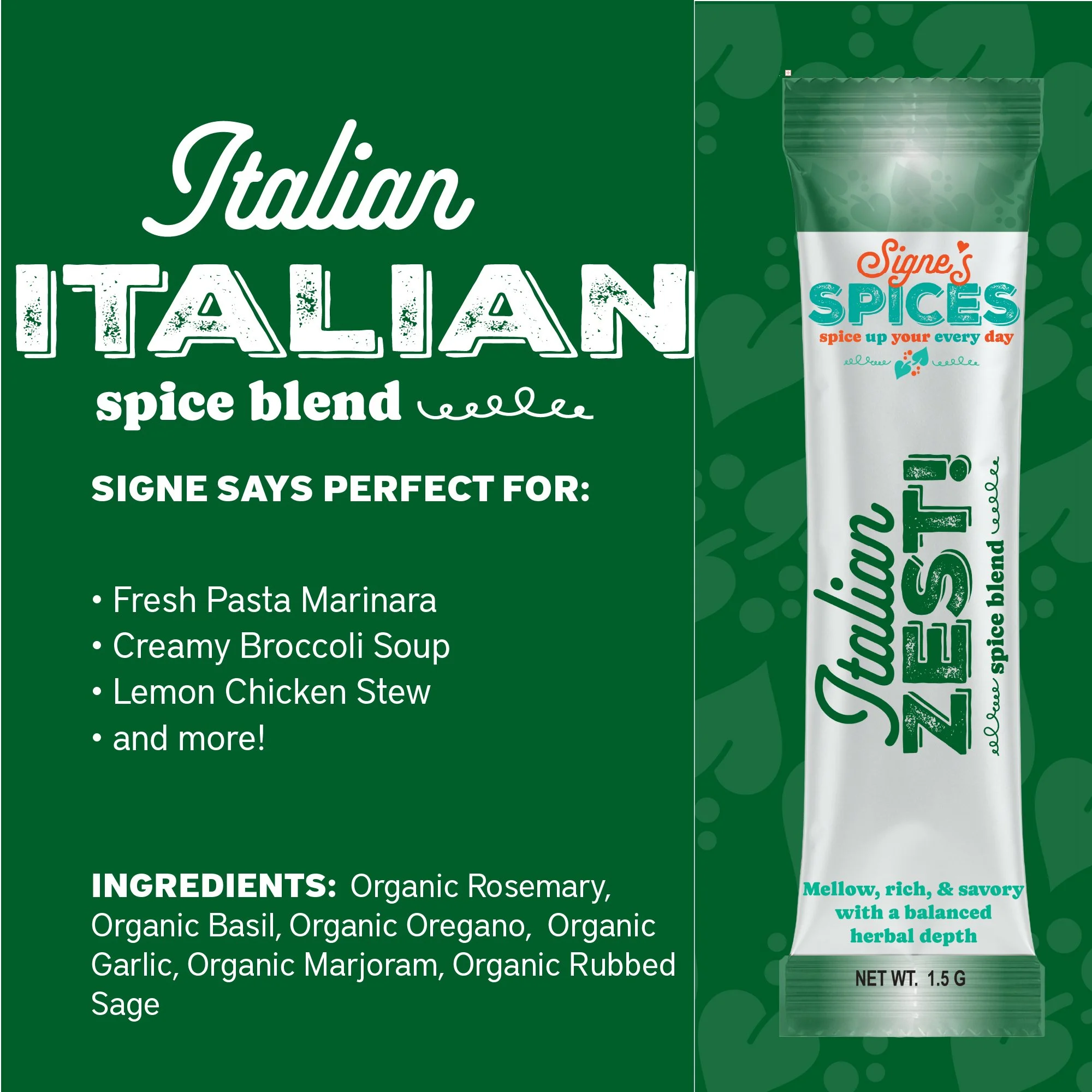
Try it with:
2. Greek / Mediterranean
What it tastes like
Bold and savory with unexpected warmth. Garlic, oregano, a whisper of cinnamon and nutmeg underneath.
Where it shows up
Chicken, lamb, fish, flatbreads, roasted potatoes.
Beginner move
Season raw chicken and let it sit for 20 minutes before heat. The meat absorbs it instead of just wearing it on the surface. That's the step most people skip.
What to cook first
Greek-style chicken thighs. Packet on raw chicken, 20 minutes rest, sear in a hot pan. Done in under 30 minutes total.
(Swap in firm tofu or seitan — same method, same golden crust.)
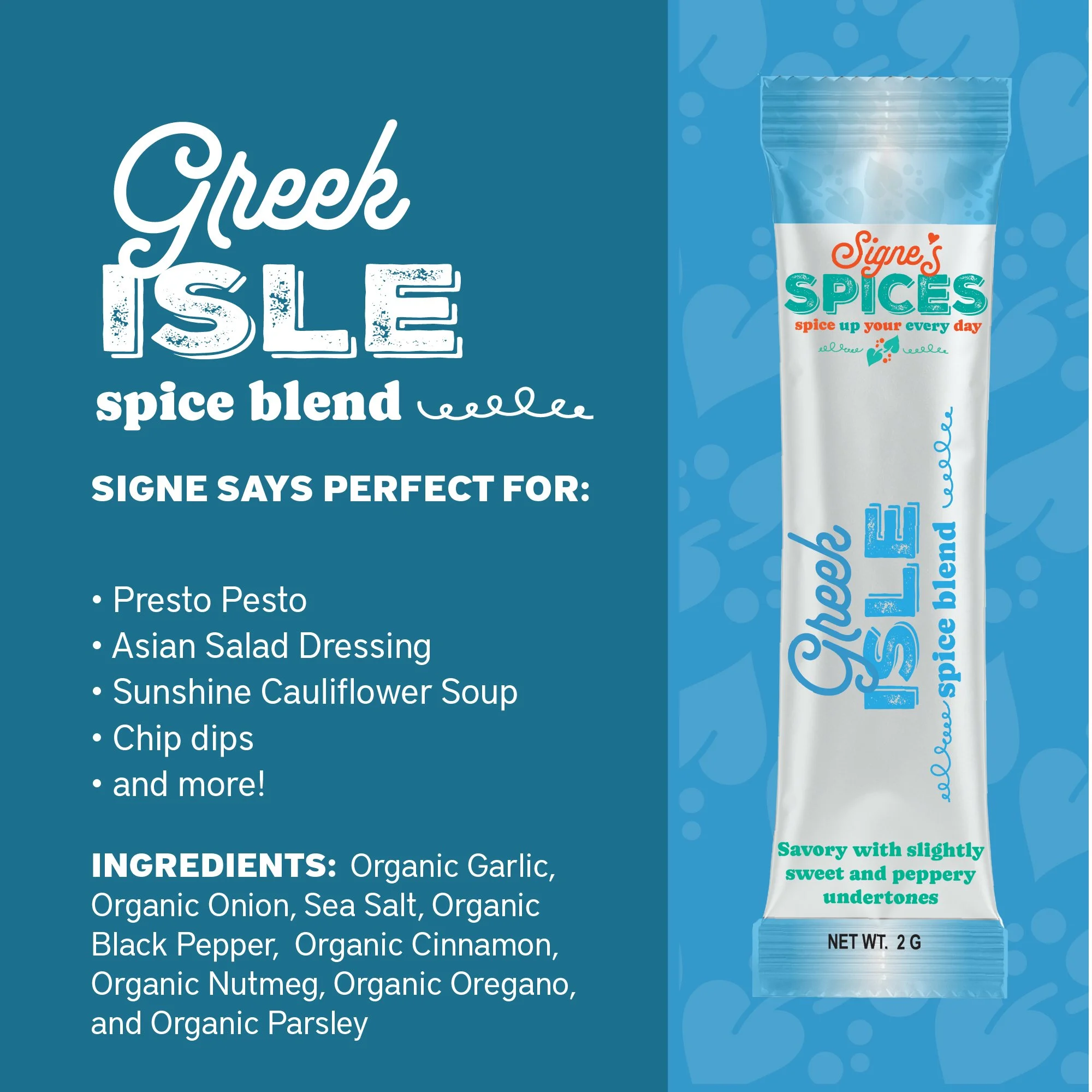
Try it with:
3. Indian-inspired
What it tastes like
Deep, earthy, warming. Turmeric, cumin, coriander, a little heat from cayenne.
Where it shows up
Curries, lentils, chickpeas, rice dishes, roasted cauliflower.
Beginner move
Bloom your spices in hot oil before anything else goes in. 30 seconds. This is the step that separates flat curry from real curry. The heat activates the oils in the spices — you'll smell the difference immediately.
What to cook first
One can of chickpeas, one can of coconut milk, one spice packet. Bloom the spices, add the chickpeas, pour in the coconut milk. Simmer 12 minutes. Restaurant-level curry. No experience required.
(Already fully vegan as written. Works with lentils or cubed tofu too.)
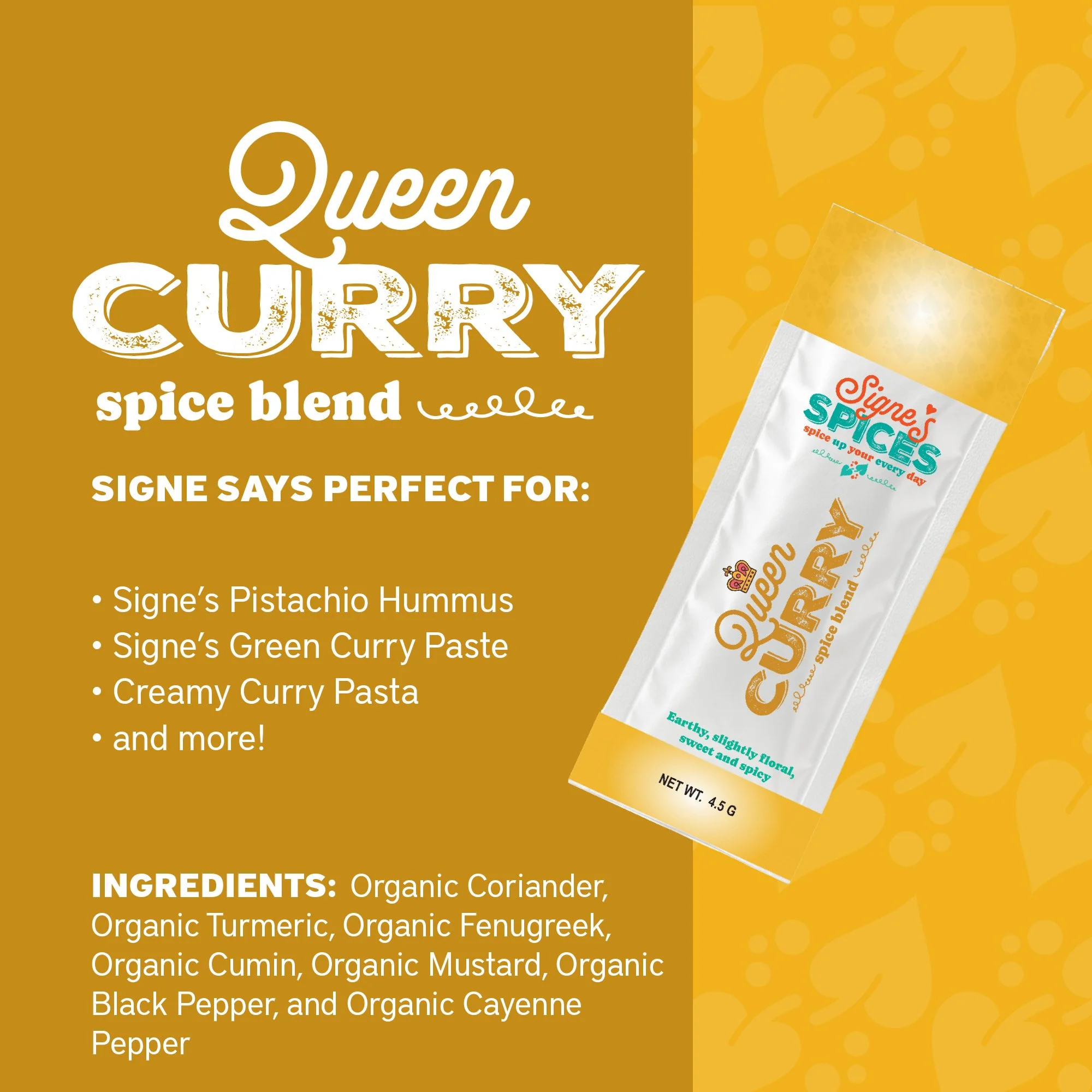
Try it with:
4. Italian — Spicy
What it tastes like
Everything Italian, turned up. Red pepper heat, garlic depth, rosemary and basil underneath.
Where it shows up
Pizza, eggs, pasta sauce, sausage, roasted vegetables.
Beginner move
Use it where you'd normally reach for hot sauce. Hot sauce adds heat. This adds heat plus garlic, herb depth, and aroma. It's not the same category.
What to cook first
Scrambled eggs with Spicy Sicilian. Two eggs, packet goes in as they cook, off the heat when they're just set. Breakfast that tastes intentional.
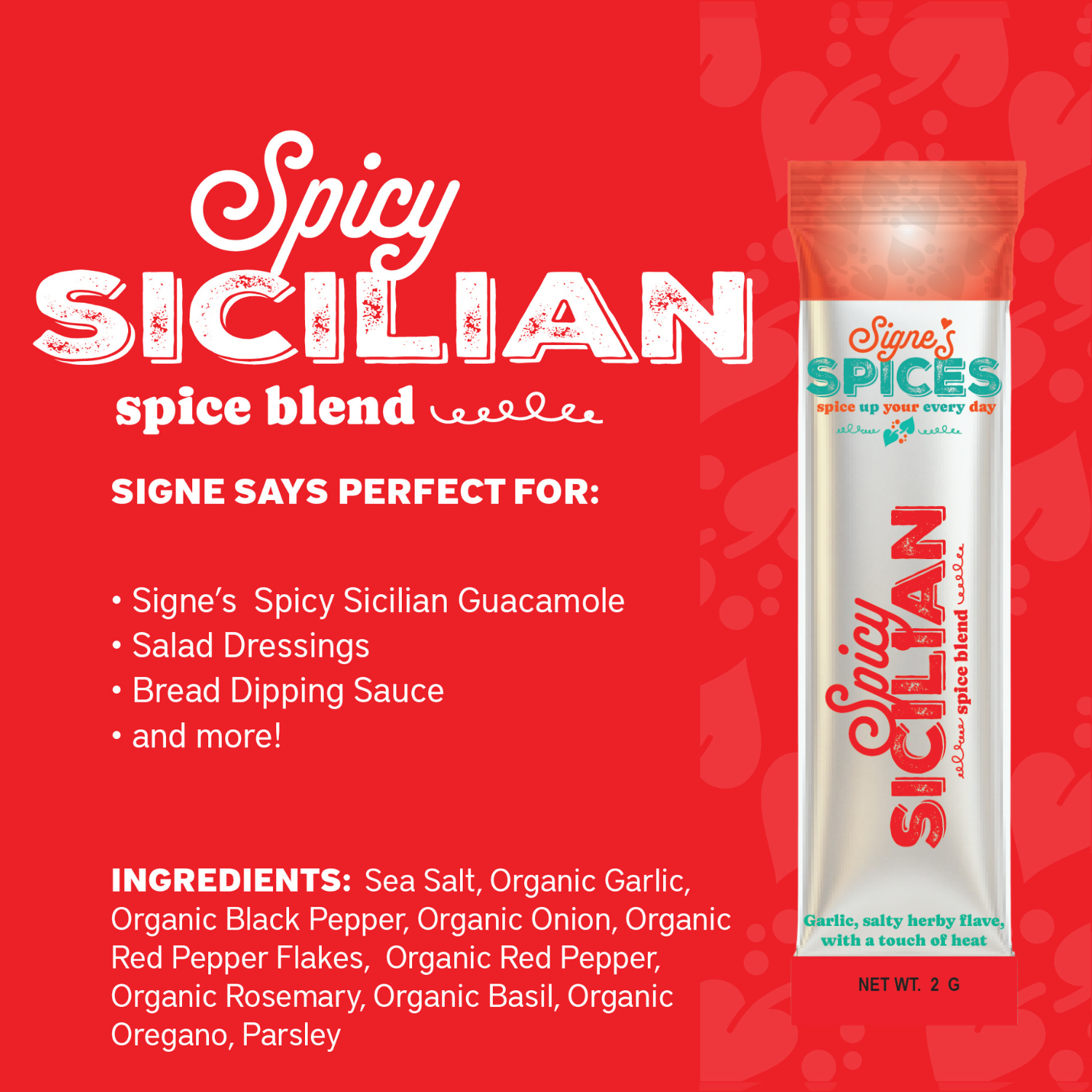
Try it with:
5. Bold Everyday
What it tastes like
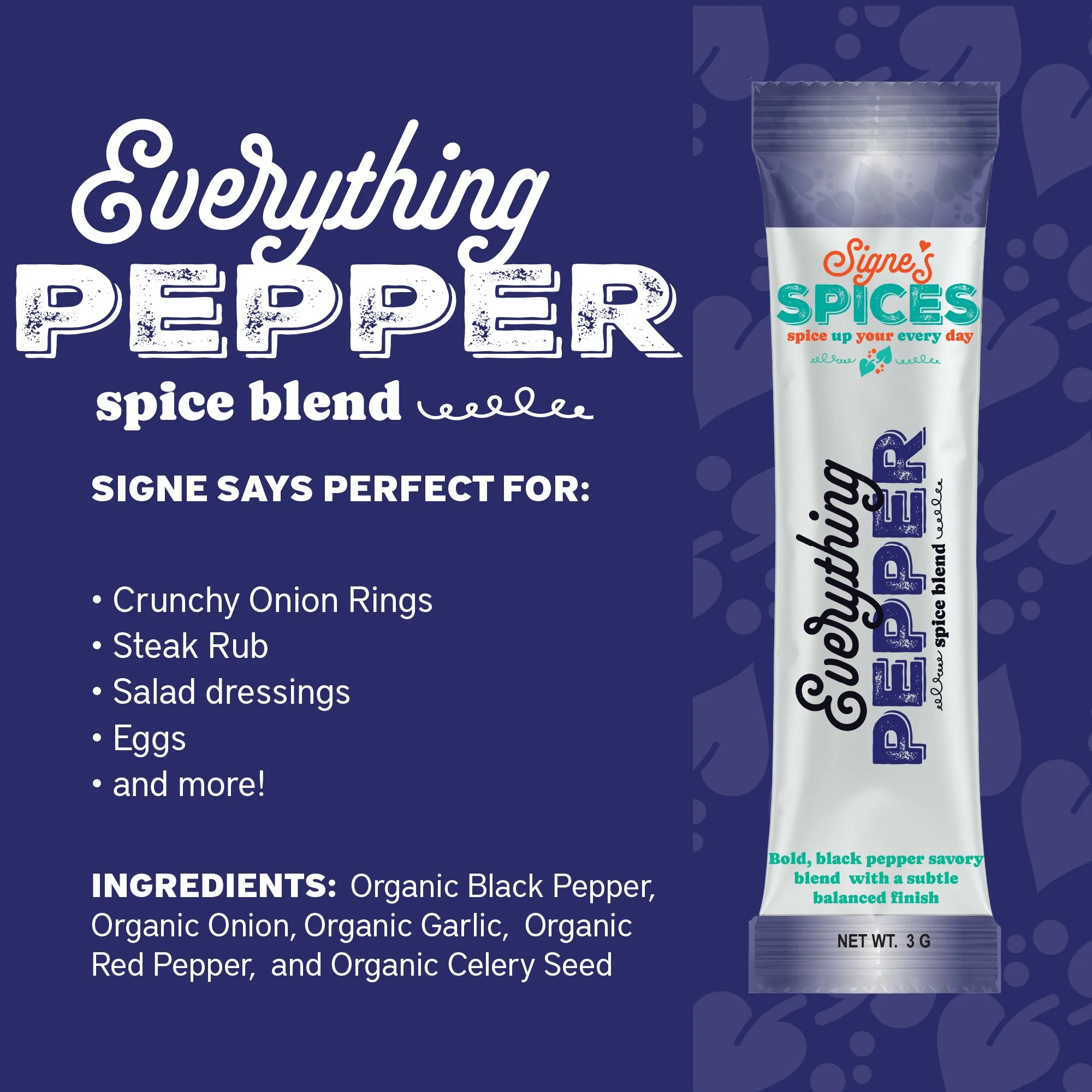
Warm, complex, slightly smoky. Black pepper, onion, garlic, celery seed, red pepper working together.
Where it shows up
Steak, burgers, ground meat, roasted vegetables, marinades.
Beginner move
Season before heat, not after. Pepper on a finished plate stays on the surface. Pepper during cooking — with oil and heat — becomes part of the dish.
What to cook first
Ground beef with Everything Pepper in a hot pan. Season before it hits the skillet. The crust you get is different from anything you've made before.
(Swap in crumbled tempeh or firm tofu — press it dry first and treat it exactly like ground beef.)
Try it with:
6. Wellness / Golden
What it tastes like
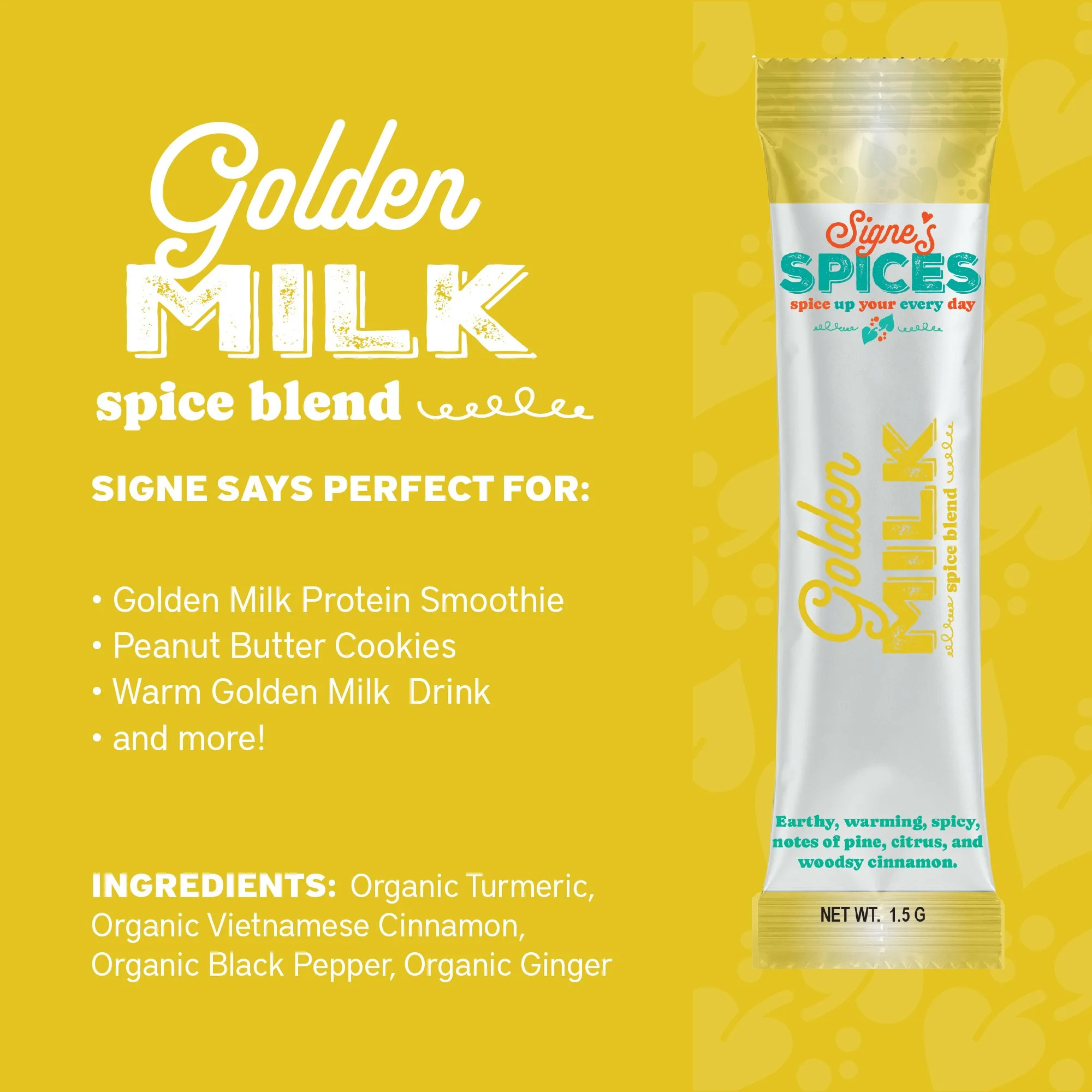
Earthy and warm with a subtle spice. Turmeric, Vietnamese cinnamon, ginger, black pepper.
Where it shows up
Warm milk, lattes, smoothies, oatmeal, overnight oats.
The thing most people don't know
Turmeric doesn't absorb without black pepper. The compound piperine in black pepper activates the curcumin in turmeric. Most golden milk recipes skip this. A good golden milk blend already has both — and gets the ratio right.
“Combining the spice with black pepper may help increase your body’s ability to absorb turmeric’s beneficial compounds. A substance in black pepper called piperine, when combined with curcumin, has been shown to increase bioavailability by 2000%.” — Source: Johns Hopkins Medicine
What to make first
Warm oat milk, one packet, stir. Under two minutes. A better 3pm than another coffee.
Try it with:
The Simplest Rule in Global Cooking
Every cuisine in this guide follows the same pattern:
Season early. Use heat correctly. Don't overcomplicate the base.
That's it. The spice blend handles the flavor profile. You handle the timing.
You don't need to understand every ingredient. You need a blend that was already calibrated by someone who did.
Where to Start
If you've never cooked outside your comfort zone before, start here:
Easiest first win:
Greek Isle on chicken thighs. One packet, 20 minutes rest, hot pan. Done.Most impressive result:
Queen Curry chickpea curry. Pantry ingredients. 15 minutes. Looks like you spent an hour.Best for everyday use:
Everything Pepper on anything savory. It becomes the base you reach for without thinking.
Frequently Asked Questions
Do I need special equipment to cook global food?
No. A pan, an oven, and a pot cover 95% of what's in this guide.
What if I've never cooked with turmeric before?
Start with Golden Milk. You're making a drink, not a dish. Two minutes, one packet, warm milk. That's the whole thing and it’s so delicious!
Are SIGNe’S SPICES blends salt-free?
Most are.
Italian Zest, Queen Curry, Bake Shoppe, Autumn Pumpkin, Golden Milk, and Everything Pepper contain no added salt.
Greek Isle and Spicy Sicilian contain sea salt.
Can I use these on vegetables only (no meat / VEGeTARIAN / VEGAN)?
Yes. Every blend in this guide works on roasted vegetables, legumes, and plant-based proteins.
Italian Zest and Spicy Sicilian are especially good on vegetables.
For a heartier vegan meal, firm tofu or tempeh work as a direct swap in any recipe that calls for chicken or ground beef: press dry, season the same way, apply the same heat.
How long do the packets stay fresh?
Each packet is sealed individually, so it stays potent until you open it. This is unlike a jar that starts losing aroma the moment it's first opened.
What are the easiest global cuisines to cook at home?
Mediterranean and Italian are the most beginner-friendly. Both use herb-forward spice blends, simple proteins, and high-heat cooking.
Greek and Italian seasoning blends work on chicken, fish, and vegetables — no special technique required.
What spices do I need to cook international food at home?
You don't need a full spice rack. Most global cuisines are built on 5-7 core spices already blended together. A pre-balanced blend for each cuisine — Italian, Greek, Indian, Mediterranean — covers the majority of international cooking without buying individual ingredients.
Why does restaurant food taste more flavorful than homemade?
Restaurants use pre-calibrated spice ratios built over years of testing. Home cooks typically season with individual spices and guess on amounts. Using a pre-blended seasoning closes that gap immediately — same technique, same result.
Is global cooking healthy?
Most global cuisines are naturally built around whole ingredients — herbs, spices, lean proteins, and vegetables. Spice blends with no fillers, no MSG, and no artificial ingredients keep the flavor without adding anything unnecessary.